Port authority
Montréal cruise port guide
Alexandra Pier and Iberville Terminal, getting around, bilingual culture, and how cruise passengers reach Old Montréal.
Alexandra Pier and Iberville Cruise Terminal
Location:Cruise ships dock along Alexandra Pier in the Old Port of Montréal (Vieux-Port), at the eastern edge of Old Montréal (Vieux-Montréal). The Iberville Cruise Terminal provides customs and immigration processing for most Canada & New England embarkations, disembarkations, and day calls.
Terminal layout: Facilities include customs halls, restrooms, and taxi stands outside the terminal building. Dining and shopping are limited inside — passengers typically walk to Old Montréal cafés or bring snacks for short port days. Signage directs toward Rue de la Commune and the Old Port promenade.
Distance to highlights:Place d'Armes and Notre-Dame Basilica sit roughly 800 metres (half a mile) west — 10–15 minutes on foot. Place Jacques-Cartier and Rue Saint-Paul are another 5–10 minutes beyond. Mount Royal lookout requires coach or taxi — not walkable on a port day.
Old Port access: The Clock Tower, Science Centre, and St. Lawrence riverfront paths begin at your feet. Many passengers combine a short riverfront stroll with an Old Montréal walking tour on the same port day.
Walking from the cruise terminal
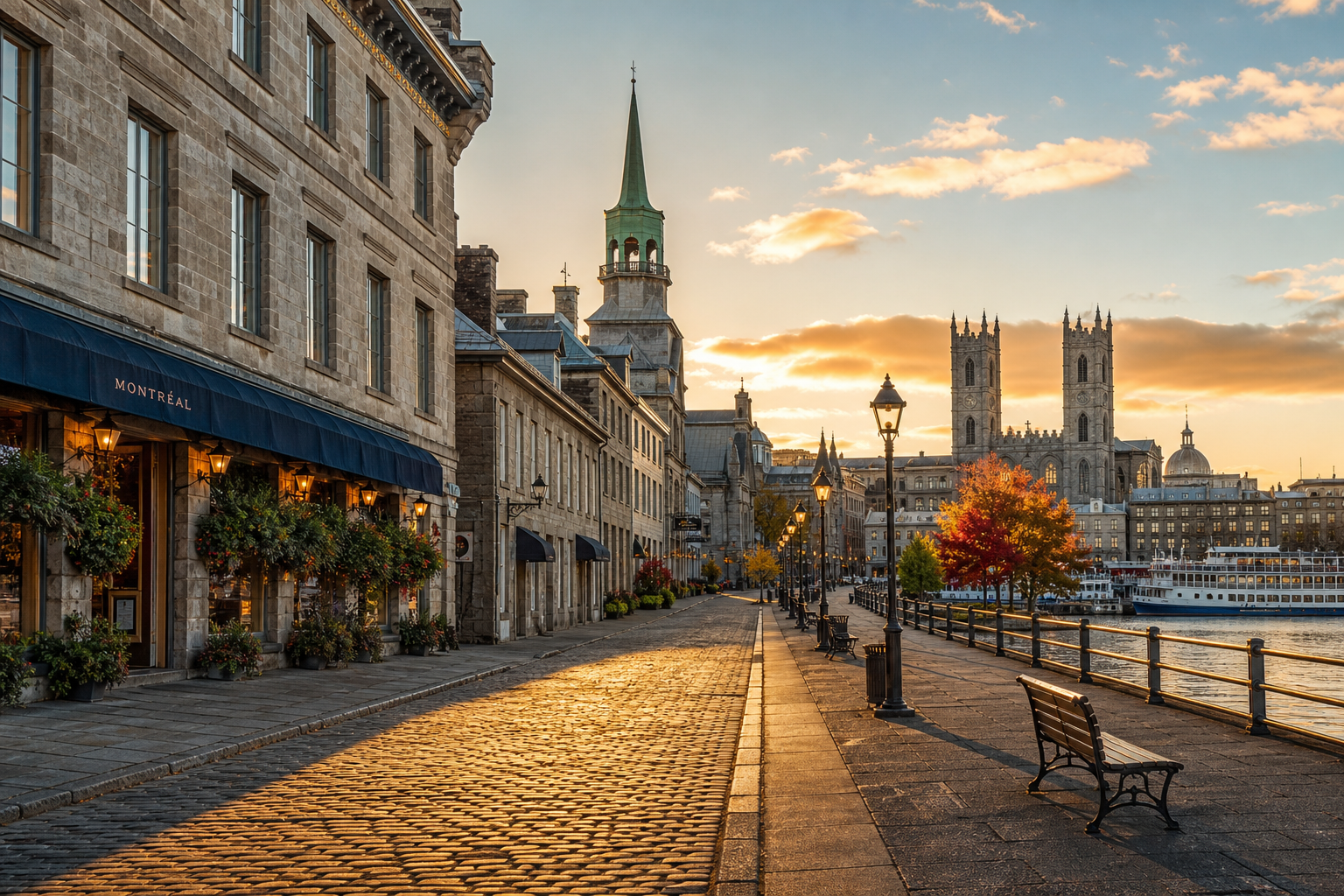
Montréal rewards walkers more than almost any other major cruise port in Canada. Alexandra Pier sits inside the historic district rather than across an industrial zone — cobblestone streets, church spires, and French-language signage begin within minutes of disembarkation.
Typical route:Exit toward Rue de la Commune, follow the Old Port promenade west, then turn inland on Rue Saint-Paul or Rue Saint-Jacques toward Place d'Armes. The path is mostly flat with some cobblestones — wear supportive shoes.
Realistic walking radius: Within 20 minutes on foot you can reach Notre-Dame Basilica, Place Jacques-Cartier, the Pointe-à-Callière museum, and dozens of galleries and cafés. Mount Royal, Jean-Talon Market, and Olympic Stadium require transport — see our Mount Royal guide.
For detailed routes and cobblestone warnings, read walking Montréal from the cruise port and our flagship Old Montréal from cruise port guide.
Taxis, rideshare, and coaches
Taxis and rideshare vehicles (Uber, Lyft, Eva) queue outside the cruise terminal on busy call days. Fares to downtown or Mount Royal typically run $15–25 CAD depending on traffic. Confirm your driver knows "Alexandra Pier" or "Terminal de croisière Iberville."
Organised shore excursions include coach or van pickup at the pier — the lowest-stress option for Mount Royal scenic tours, food tours to Jean-Talon Market, and Québec City day trips. Reputable operators structure return timing around all-aboard deadlines.
| Mode | Typical time to Old Montréal core | Notes |
|---|---|---|
| Walking | 10–15 min to Place d'Armes | Free; cobblestones; best first choice |
| Taxi / rideshare | 5–10 min | Useful for Mount Royal or markets |
| STM metro / bus | 15–25 min with transfers | Champ-de-Mars station nearby; see below |
| Shore excursion coach | Included in tour | Pier pickup; cruise-timed return |
| BIXI bike share | 5–15 min to districts | Seasonal; guided bike tours safer on port days |
STM public transport
Montréal's STM operates metro, bus, and commuter rail. Champ-de-Mars metro station (Orange Line) sits a short walk from the cruise terminals — one stop to Place-d'Armes or Berri-UQAM for connections across the city.
Cruise passenger reality check: Public transit works for confident independent travellers on longer port days heading to Jean-Talon Market, the Plateau, or Olympic Park. Managing Opus card purchase, transfers, and return timing against all-aboard adds stress most first-time visitors avoid. An Old Montréal walking tour with pier pickup or a simple stroll to Place Jacques-Cartier often delivers better value for limited hours ashore.
Single fares cost a few dollars; day passes suit multiple rides. The STM mobile app and ticket machines at metro stations accept credit cards.
French, English, and local etiquette
Montréal is the largest French-speaking city in North America and the cultural capital of Québec. Bill 101 established French as the primary language of public life, yet tourism, hospitality, and downtown business operate comfortably in both French and English.
Practical tips:Greet shop staff with "bonjour" (hello) and thank them with "merci." Menus often appear in French first — staff will switch to English when asked. This small effort reflects respect for Québécois identity and usually improves service.
Our dedicated French Canadian culture guide covers language, festivals, cuisine identity, and Catholic architectural heritage in depth.
Weather and what to wear
Montréal's continental climate brings hot summers, cold winters, and spectacular fall foliage on St. Lawrence cruises. Spring calls (May–June) and fall calls (September–October) often bring crisp mornings and mild afternoons — layers are essential.
Summer calls (June–August) can push 30°C (86°F) with humidity, while winter calls (November–March) require heavy coats, hats, and traction-friendly footwear on icy cobblestones.
- Pack a compact rain jacket year-round
- Wear comfortable walking shoes — cobblestones punish thin soles
- Sunglasses and sunscreen for exposed riverfront walks
- Light fleece or windbreaker even on sunny autumn days
Seasonal planning detail lives in our best time to visit Montréal guide.
Tipping and currency
Canada uses Canadian dollars (CAD). Credit and contactless payment are standard at restaurants, museums, and shops. Keep small bills for market stalls, street performers, and coat checks.
Tipping norms: Restaurants expect 15–18% on sit-down meals (tip is not included in the bill). Bar service $1–2 per drink or 15%. Taxi and rideshare 10–15%. Tour guides $5–10 CAD per person on shared tours, higher for private guides.
International visitors should notify their bank before travel to avoid card blocks. ATM fees apply at airport and downtown machines — withdraw once rather than repeatedly.
Old Montréal and Notre-Dame Basilica
Old Montréal is the reason most passengers choose this port — fortified walls, 18th-century stone facades, and a bilingual atmosphere that feels distinctly European. Notre-Dame Basilica dominates Place d'Armes with a neo-Gothic facade and an interior of deep blue vaulted ceilings.
Interior basilica visits require timed tickets purchased in advance. Organised tours coordinate entry; self-guided visitors should book online before leaving the ship. Allow 30–45 minutes inside plus Old Montréal exploration time.
Full timing and access advice is in our dedicated Notre-Dame Basilica guide and flagship Old Montréal from cruise port page. Most Old Montréal walking tours and city highlights tours include the district on standard itineraries.
Best excursions for cruise passengers
Match your port hours to excursion type rather than overbooking:
- 4–5 hours: Old Montréal walking tour or St. Lawrence river cruise
- 6 hours: City highlights tour or Notre-Dame Basilica tour
- 8+ hours: Montréal food tour, Laurentians day trip, or bike tour
Compare ranked options in our best Montréal shore excursions guide or use the cruise planner.
Return-to-ship confidence
HighMontréal returns are generally reliable when you stay in Old Montréal — the terminal is minutes from major sights. Build 30–45 minutes before all-aboard even on organised tours. Traffic on René-Lévesque Boulevard and summer festival congestion near the Old Port can delay taxis and coaches from downtown and Mount Royal. Walking back from Place Jacques-Cartier is predictable — factor extra time if you venture to Jean-Talon Market, the Laurentians, or Québec City.
Organised shore excursions from reputable operators are structured around cruise schedules. Confirm terminal pickup and drop-off when you enquire.
Frequently asked questions
Where do cruise ships dock in Montréal?
Most large ships use Alexandra Pier and the adjacent Iberville Cruise Terminal in the Old Port (Vieux-Port). The terminals sit at the eastern edge of Old Montréal, within walking distance of Place d'Armes and the Notre-Dame Basilica.
Can you walk from the Montréal cruise terminal to Old Montréal?
Yes — Old Montréal begins roughly 5–15 minutes on foot from Alexandra Pier. Place d'Armes, Rue Saint-Paul, and Place Jacques-Cartier are all reachable without a taxi on most port days.
Do you need Canadian dollars in Montréal?
Yes. Canada uses Canadian dollars (CAD). Credit and debit cards are widely accepted; carry some cash for market stalls, tips, and small vendors. U.S. dollars may be accepted at tourist spots but exchange rates are unfavourable.
Do you need to speak French in Montréal?
No — Montréal is officially bilingual and most tourism staff speak English. A polite bonjour when entering shops and merci when leaving is appreciated and part of local etiquette.
What is the best shore excursion from Montréal?
First-time visitors usually choose an Old Montréal walking tour, city highlights tour, or Notre-Dame Basilica visit. Match choice to your hours ashore — see our best excursions ranking.
How early should cruise passengers return to Alexandra Pier?
Build at least 30–45 minutes before your ship's all-aboard time. Summer festival traffic, René-Lévesque Boulevard congestion, and crowded Old Port quays can delay taxi and coach returns.
Is Montréal weather unpredictable for port days?
Montréal has four distinct seasons. Spring and fall bring variable temperatures; summer can be hot and humid; winter calls require heavy layers. St. Lawrence river breezes cool the waterfront even on warm days.
Plan your port day
- Montréal cruise port guide — Alexandra Pier, walking, STM, weather
- Cruise planner — match excursions to your hours ashore
- One day in Montréal
- Old Montréal from cruise port
- Best Montréal shore excursions
- Things to do from a cruise ship
- Old Montréal walking tour — enquire about this tour
- City highlights tour — enquire about this tour
Need help choosing?
Tell us your ship, port hours, and interests — we'll suggest Montréal shore excursions that fit your schedule and return-to-ship window.